
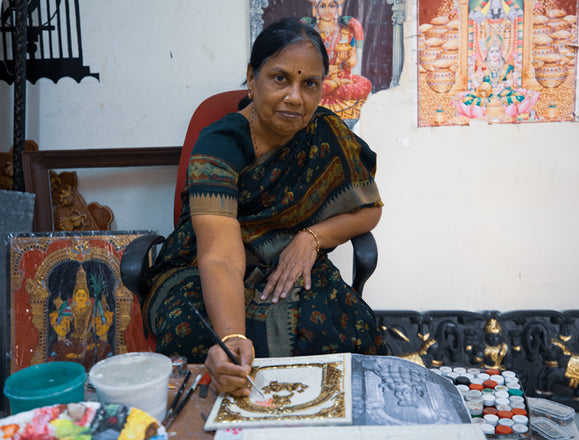
The founder Vanmathi Balakrishnan hails from Kumbakonam town in the Tanjore District. She has been trained in the traditional art form by the native artisans of the Tanjore region for several years.

Discover the World Through Original Paintings For Sale

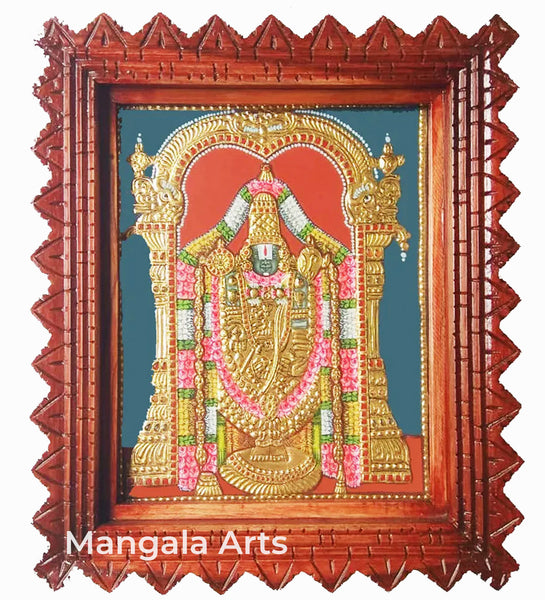


Wonderful balaji tanjore painting that gives divine look to my pooja room.
– Mithra

Bought a beautiful customized painting. Awesome collections and great customer service.
– Mayank Pandey

Had a unforgettable painting at my home that gives luxurious look. Thanks to Mangala Arts and its artists.
– Shaiju

A great experience with Mangala Arts Team.
– Nirmal

For Shipping details
October 19, 2026

A pooja room brings to mind a scene where lamps are burning, bells are ringing, and flowers are freshly placed before the deities. This space often feels quieter than the rest of the house. Perhaps that is why a painting chosen for this room needs to be attractive and have a deep presence. Goddess Tanjore paintings fit beautifully into this setting. Their rich colours, raised detailing, glowing gold surfaces, and jewel-like embellishments give the divine figures a striking presence without making the room feel overly decorated. The traditional Tanjore style itself has deep South Indian roots and is known for its vivid colours, gold work, gesso relief, and decorative stone or glass details. Mangala Arts brings together several goddess-themed Tanjore paintings that work particularly well for devotional spaces. From the nurturing Annapoorni to the graceful Andal and commanding Raja Rajeshwari Amman, each goddess brings a different mood to the pooja room. Table of Contents Annapoorni Tanjore Painting Raja Rajeshwari Amman Tanjore Painting Andal Tanjore Painting Kamakshi Amman Tanjore Painting Mahalakshmi Tanjore Painting Kaliamman Tanjore Painting Alamelu Tanjore Painting Lalithambikai Lakshmi Tanjore Painting How to Choose the Right Goddess Tanjore Painting for Your Pooja Room FAQs Conclusion 1. Annapoorni Tanjore Painting: The Goddess of Nourishment Goddess Annapoorni in a home represents food, nourishment, and abundance, making her presence particularly meaningful in a household where the kitchen and dining table are central to everyday family life. An Annapoorni Tanjore painting can bring that idea of nourishment into the pooja room in a visually rich way. The Tanjore Annapoorni paintings at Mangala uses 24-carat gold foil and Jaipur gems, with the traditional handmade character associated with Tanjore artwork. The painting is also offered in several sizes and frame options, making it easier to adapt it to different pooja-room layouts. The gold detailing is especially appealing in a prayer space because it catches the gentle flicker of an oil lamp rather beautifully. 2. Raja Rajeshwari Amman Tanjore Painting: Regal and Radiant If your pooja room has a slightly grander character, a Raja Rajeshwari Amman Tanjore painting can become its visual centrepiece. Raja Rajeshwari Amman is associated with wisdom, grace, and supreme feminine power. She is described as Gnana Swaroopini, or the personification of wisdom, and presents her as a powerful yet compassionate divine presence. This makes the painting interesting beyond its decorative appeal. The goddess occupies the frame and gives the room a ceremonial aura. A larger Raja Rajeshwari painting can work particularly well on the principal wall of a spacious pooja room, while a more compact version can sit above a smaller altar without overwhelming it. 3. Andal Tanjore Painting: The Beauty of Devotion Some goddess paintings communicate devotion. An Andal Tanjore painting brings precisely that quality into the pooja room. Andal is celebrated as the “Queen of Bhakti” and is remembered as the only woman among the twelve Alvar poet-saints of South India. Her association with devotion gives her depiction a softer, more intimate character. Mangala Arts offers several Andal interpretations, including an Andal Antique Finish Tanjore Painting, an Oval Andal Antique Finish painting, and other Andal designs. The oval version can be an especially charming choice if your pooja room already contains traditional lamps, brass vessels, bells, or carved wooden elements. Its shape can break the predictable rhythm of rectangular wall decor. 4. Kamakshi Amman Tanjore Painting: A Graceful Divine Presence The above painting is from Balaji Tanjore Art Gallery. Goddess Kamakshi carries a particularly strong connection with South Indian devotional tradition. A Kamakshi Amman Tanjore painting can therefore feel both culturally rooted and visually majestic in a pooja room. Kamakshi Amman is seen as a form of Goddess Parvati or Tripura Sundari and highlights the symbolic association of her eyes with Goddess Lakshmi and Goddess Saraswati. That symbolism makes Goddess Kamakshi the best choice for families looking for a goddess painting that represents more than one dimension of divine feminine energy. The rich Tanjore treatment, with raised work and luminous gold, gives the goddess a sculptural quality. From a distance, the gold catches attention; closer up, the finer detailing rewards a longer look. 5. Mahalakshmi Tanjore Painting: Let the Gold Speak A pooja room and a Mahalakshmi painting almost seem naturally paired. Goddess Lakshmi is associated with prosperity, abundance, and auspiciousness, while the visual language of Tanjore painting already leans toward richness through gold and ornamentation. Mangala Arts carries Mahalakshmi paintings in its goddess collection, including antique semi-embossed and antique 3D versions. A Mahalakshmi painting can work beautifully as a central piece when the rest of the room is kept relatively restrained. Rather than filling every wall, give space to the painting. A simple lamp below it, a few fresh flowers, and uncluttered surroundings can make the gold work appear even more luminous. 6. Kaliamman Tanjore Painting: Strength With Character A Kaliamman Tanjore painting introduces a different emotional note from the gentler expressions of Annapoorni or Andal. Kali is traditionally associated with powerful protective energy, and that strength can give the pooja room a distinctly commanding character. This is a good choice for someone who wants the Goddess to become the strong visual anchor of the room, particularly when paired with deeper-toned woodwork, brass decor, or traditional architectural details. 7. Alamelu Tanjore Painting: Grace in a Traditional Frame Alamelu, also known as Alamelu Manga or Padmavati, is another graceful choice for a devotional setting. She is traditionally associated with Lord Venkateshvara and Goddess Lakshmi. Alamelu Tanjore painting is designed for spaces including pooja rooms and is available with different frame choices and customization options at Mangala Arts. This makes the painting useful when the goal is to create harmony between the artwork and the existing interiors. A classic frame can suit a traditionally styled pooja room, while a more ornate frame can complement an elaborate altar. 8. Lalithambikai Lakshmi Tanjore Painting: A More Unusual Choice For homeowners looking for beautiful and Goddess-themed Tanjore paintings, Goddess Lalithambikai Lakshmi deserves attention. This type of painting can be an appealing alternative when the usual choices of Lakshmi, Saraswati, or Durga feel too familiar. It still carries the devotional richness expected from a Tanjore artwork while giving the pooja room a slightly more distinctive personality. How to Choose the Right Goddess Tanjore Painting for Your Pooja Room Choosing a goddess is only half the decision. The painting also needs to belong naturally to the room. First, consider scale. A large painting can dominate a spacious prayer room, while a smaller artwork may be better suited to a compact apartment pooja unit. Next, look at the room's existing colours. Gold-heavy Tanjore paintings pair naturally with wood, cream, maroon, green, and warm neutral interiors. You do not necessarily need to match the wall colour exactly; contrast can often make the artwork more noticeable. Then consider the personality of the goddess. Goddess Annapoorni can bring a feeling of nourishment and domestic abundance. Andal brings devotion, and Raja Rajeshwari Amman feels regal and powerful. Kamakshi carries an elegant spiritual symbolism, while Kaliamman introduces strength. Finally, think about the craft itself. Traditional Tanjore paintings are valued for their handmade character, relief work, gold foil, vivid colours, and embellishment. Mangala Arts' pieces are crafted by artisans in Thanjavur, with selected works using 24-carat gold foil and Jaipur gems. FAQs 1. Which goddess Tanjore painting is best for a pooja room? There is no single best choice because the ideal goddess depends on the spiritual and aesthetic character you want for the room. Annapoorni, Raja Rajeshwari Amman, Andal, Kamakshi Amman, Mahalakshmi, and other goddess depictions can all make meaningful choices. 2. Is an Amman Tanjore painting suitable for a small pooja room? Yes. A smaller Amman Tanjore painting for pooja room decor can sit above a compact altar without taking over the space. Choosing the correct frame and proportion is more important than simply choosing the largest painting. 3. Why are Tanjore paintings suitable for pooja rooms? Their devotional subjects, vivid colours, raised decorative details, and gold work naturally complement traditional prayer spaces. The artwork can also become a focal point without requiring extensive additional decoration. 4. What makes an Annapoorni Tanjore painting special? Goddess Annapoorni represents food and nourishment, giving the painting a meaningful connection with household abundance. Mangala Arts' Annapoorni works also feature traditional Tanjore craftsmanship, including gold foil and gem embellishments. 5. Can Tanjore paintings be customized for a pooja room? Some Mangala Arts paintings can be customized in terms of size and frame, which can be useful when the wall space or altar arrangement has specific dimensions. Conclusion Whether you are drawn to the nurturing presence of Annapoorni, the regal beauty of Raja Rajeshwari Amman, the devotion of Andal, the grace of Kamakshi Amman, or the richness of Mahalakshmi, a Tanjore painting gives that choice a distinctly traditional expression. The beauty lies in the details: the quiet shimmer of gold, the raised ornamentation, the jewel-like embellishments, and the patient hand of the artisan. These are not merely decorative flourishes. Together, they are what make an Amman Tanjore painting feel at home in a prayer room. Explore Goddess Tanjore Paintings from Mangala Arts If you are looking for an Amman Tanjore painting, an Annapoorni Tanjore painting, a Raja Rajeshwari Amman Tanjore painting, an Andal Tanjore painting, or a Kamakshi Amman Tanjore painting, explore the collection at Mangala Tanjore Paintings by Mangala Arts. This is the brand that offers traditional Tanjore paintings online and has its shop at 745, Avinashi Road, Near Anna Silai, Coimbatore, Tamil Nadu. 👉Explore our paintings online
October 13, 2026

Did you know that the artwork you bring home can influence the character of a room? It can complement its colors, reflect your taste, and sometimes carry a meaning that outlasts changing decor trends. This is where the choice between a Lakshmi Tanjore painting and modern wall art becomes rather interesting. Modern wall art has an obvious attraction. It can be abstract, minimalist, geometric, colorful, experimental, or wonderfully strange. A Lakshmi Tanjore painting, on the other hand, arrives with an entirely different vocabulary. It brings gold, relief work, gemstones, symbolism, craftsmanship, and a distinctly South Indian artistic identity into the room. At Mangala Arts, the Lakshmi collection includes traditional Lakshmi, Gaja Lakshmi, Ashta Lakshmi, and other interpretations. They are made with gold foil, Jaipur stones, and handcrafted detailing. So, which one deserves a place on your wall? The answer depends on what you want the artwork to do. Table of Contents What Makes a Lakshmi Tanjore Painting Different? The Different Styles of a Lakshmi Tanjore Painting Modern Wall Art: Where It Has the Edge Lakshmi Tanjore Painting vs Modern Wall Art Choosing the Right Lakshmi Painting for Your Space When a Lakshmi Tanjore Painting Makes More Sense FAQs Conclusion What Makes a Lakshmi Tanjore Painting Different? A Lakshmi Tanjore painting has a visual language that is rooted in the classical Tanjore tradition. Here, raised gesso work, bright colors, gold foil, and ornamental details create a surface that has genuine depth. For example, the Lakshmi Tanjore paintings at Mangala Arts are handmade works crafted by artisans in Thanjavur, with 24-carat gold foil and Jaipur gems used across its collection. That richness becomes particularly noticeable when the painting catches natural or artificial light. As for symbolism, Goddess Lakshmi is traditionally associated with wealth, prosperity, fortune, beauty, and auspiciousness. A painting depicting her therefore carries a meaning that extends beyond color coordination or interior styling. The Different Styles of a Lakshmi Tanjore Painting The Gajalakshmi Tanjore painting is especially distinctive. Lakshmi is depicted with elephants, creating a composition associated with grandeur, royalty, and abundance. You can have several Gaja Lakshmi interpretations, including versions with different sizes and frame options. Then there is the Ashtalakshmi Tanjore painting, which opens the door to the eight forms of Lakshmi. This collection includes Adi Lakshmi, Dhana Lakshmi, Dhanya Lakshmi, Vidya Lakshmi, Gaja Lakshmi, Santhana Lakshmi, Veera Lakshmi, and Vijaya Lakshmi forms. This makes a Lakshmi Tanjore painting particularly suitable for someone who wants the wall to tell a cultural story. Modern Wall Art: Where It Has the Edge Modern wall art has the strength of flexibility. An abstract canvas can slip comfortably into a contemporary apartment. A monochromatic geometric print can suit a minimalist bedroom. A large expressive artwork can become the dramatic centrepiece of a living room. This makes modern wall art an excellent choice when your primary objective is visual coordination. If your interiors are built around clean lines, neutral tones, exposed concrete, metal, glass and understated furniture, a modern artwork may feel immediately at home. It can echo the architectural language of the room without introducing a contrasting visual tradition. Modern art can also be easier to replace as your preferences change. Someone who enjoys frequently refreshing their interiors may appreciate that freedom. But there is a trade-off. A modern decorative piece does not possess the cultural or symbolic weight of a traditional painting. For some homeowners, that is perfectly acceptable. For others, a wall deserves something with a little more history behind it. Lakshmi Tanjore Painting vs Modern Wall Art The simplest way to make the decision is to consider what you expect from your artwork. If you want symbolism, a Lakshmi Tanjore painting has the stronger presence. It can represent prosperity, auspiciousness and devotion while still functioning as an impressive decorative piece. If you want neutrality, modern wall art is usually easier to integrate into spaces where religious imagery is not desired. If craftsmanship is important to you, Tanjore painting has a distinctive advantage. The raised ornamentation, gold foil and stone embellishments create a tactile quality that is difficult to reproduce through a conventional printed canvas. If you are decorating for a festival or a significant occasion, the equation changes again. A Lakshmi Tanjore painting for Diwali can become part of the festive environment while remaining on the wall long after the lamps have been put away. Modern wall art is better when you want to deliberately choose a non-traditional aesthetic. It could be a loft-style living room, a modern office, or a space where the artwork needs to remain visually quiet. A Lakshmi Tanjore painting, meanwhile, tends to command attention. It is less of a background accessory and more of a focal point. Choosing the Right Lakshmi Painting for Your Space Here, the subject matters. A classic Goddess Lakshmi Tanjore painting can work beautifully in a pooja room, living room or entrance area where a traditional focal point feels appropriate. Its recognisable composition gives the space a ceremonial quality without requiring an elaborate interior. A Gajalakshmi Tanjore painting is a compelling option when you want something grander. The elephants framing Goddess Lakshmi give the composition additional visual weight, making it particularly suitable for larger walls. Gaja Lakshmi paintings come in multiple sizes, with frame choices including synthetic, classic, Mani and Chettinad styles. For someone interested in representing the different dimensions of prosperity, an Ashtalakshmi Tanjore painting offers another route. Rather than focusing on a single manifestation of Lakshmi, the collection encompasses different forms associated with wealth, knowledge, courage, children, food and victory. Size should not be treated lightly. A small painting on an enormous wall can look misplaced. An oversized work squeezed into a narrow area can make the room feel crowded. Hence, explore Goddess Lakshmi pieces in several dimensions. Besides, selected products can also be customized in size and frame. The frame matters too. A traditional Chettinad-style frame can reinforce the heritage character of the painting, while a simpler frame may allow the gold and central figure to dominate without excessive ornamentation. When a Lakshmi Tanjore Painting Makes More Sense There are certain occasions when choosing a traditional Lakshmi artwork feels particularly natural. Diwali is an obvious example. Instead of buying decorations that disappear after the festival, a Lakshmi Tanjore painting can become a permanent part of the home. It can return to prominence every year without looking like temporary festive merchandise. It can also be a thoughtful Diwali gift. The combination of artistic craftsmanship and auspicious symbolism gives the painting a meaning that a generic gift may not possess. For collectors, the attraction is different again. Tanjore paintings have a recognisable artistic identity, and their handcrafted details give them a distinct character. This is also where choosing to buy Lakshmi Tanjore painting online can be useful. An online collection allows you to compare different forms, dimensions and styles before deciding what belongs in your home. Ultimately, the decision is less about traditional versus modern and more about atmosphere. If you want a wall to quietly support a color scheme, modern art may be enough. If you want the artwork to carry craftsmanship, cultural identity and symbolism, a Lakshmi Tanjore painting has considerably more to say. FAQs 1. Is a Lakshmi Tanjore painting suitable for a modern home? Yes. A richly detailed Tanjore painting can become a deliberate focal point against simpler furniture, neutral walls and contemporary interiors. 2. What is the difference between Gajalakshmi and Ashtalakshmi paintings? Gajalakshmi depicts Goddess Lakshmi accompanied by elephants, while Ashtalakshmi refers to the eight forms of Goddess Lakshmi. A Gajalakshmi Tanjore painting focuses on one particular form and its symbolism, whereas an Ashtalakshmi Tanjore painting presents multiple manifestations of Goddess Lakshmi together, creating a more elaborate and comprehensive composition. 3. Is a Lakshmi Tanjore painting suitable for Diwali? Yes. A Lakshmi Tanjore painting for Diwali can complement the traditional association of the festival with Goddess Lakshmi while remaining a permanent piece of home decor after the celebrations end. 4. What makes Tanjore paintings look three-dimensional? The raised gesso ornamentation creates relief on the surface, while gold foil, stones and other embellishments add depth and visual sparkle. These characteristics are central to the Tanjore style. 5. Can Lakshmi Tanjore paintings be customised? Selected stores allow paintings to be customised, allowing buyers to adapt the artwork to their available wall space and interior style. Conclusion Modern wall art is adaptable, contemporary and wonderfully open-ended. It is a sensible choice when your priority is a clean statement that can evolve with your interiors. A Lakshmi Tanjore painting offers something rather different. It combines visual richness with symbolism and painstaking craftsmanship. It creates artwork that can become the identity of a room or a home. If you are drawn towards gold detailing, traditional artistry and meaningful imagery, the choice may already be leaning towards Tanjore art. From classic Lakshmi artworks and imposing Gajalakshmi Tanjore paintings to one of the many Ashta Lakshmi forms, Tanjore artwork can bring a distinctive sense of heritage into an otherwise contemporary space.